The saga continues. I’ve been taking Celexa for almost 2 months now, and I continue to be amazed by what feeling like normal feels like. By what it feels like to think clearly and see the humor in life. The simple joy of an incisive and witty phrase well-turned.
I had forgotten what it feels like to laugh. Somewhere amidst all the darkness, I lost my bemusement and amusement at the daily absurdities we all confront. Instead of simply accepting that many parts of life are absurd and not within my control, I began to equate absurdity with injustice, two very different concepts. The latter requires conscious action by someone; the former simply is.
Every day, I feel better, farther away from that abyss I fear so much. Every time I laugh, I savor the kernel of joy that comes with that primeval response to humor. It tastes like sunlight with a honey, orange and ginger dressing.
The life outside my mind hasn’t changed. I’m still recently bereaved and trying to learn how to live as a single man. A man who’s rapidly aging. My life still revolves to a greater or lesser degree around medical appointments. I still have a blood clot and am still recovering from hip surgery. My work is still demanding, and my bank account still always too low.
My response to that reality is profoundly different, though, than what it was a couple of months ago. All those things seem manageable, somehow, in a way they didn’t. They were probably manageable all along, but I couldn’t see it. Not through all the darkness.
I still miss Shannon. That’ll never change. I miss my first partner, Rich, who died over 15 years ago. It took a while for that grief to modulate into a fond longing. It will take a while this time to.
But I can see that more clearly than I have been able to up until now. It doesn’t mitigate the pain, but I now believe the pain is survivable.
04 July 2011


22 June 2011
Ressurection
One of the great ironies of depression is that it’s hard to see from the inside. From the inner perspective it can look like moodiness, frustration with everyday events, an inexplicable loss of good judgment or an intense desire to be alone in a small world that you can control. From inside, nothing ties all those things together and names them symptoms of depression.
The irony continues when one gets treatment for depression. As the medication begins to take effect, all of this becomes clearer, the parts fitting together into a whole. And the depressed person realizes acutely just how dark his life had become. From within depression, the darkness seems normal. Outside of it, it leads to questions like “Why couldn’t I see this?” and “Shouldn’t I have known?”
That’s the punch line: depressed people often cannot put a name on what’s changed in their lives other than that they are unhappier. They say “stressed” or “under pressure”. They say “I can’t sleep”. They say they’re lonely and/or don’t care about anything and want to be alone.
No part of the experience makes sense until the depression begins to lift. Then the picture gradually becomes so clear one wonders how they missed it. Why they didn’t see it before.
And contrary to popular myth, antidepressants aren’t “happy pills”. They don’t create an artificial happiness that wasn’t there before but had been superceded by the dark side. Pills don’t create happiness: they only allow happiness to be more of an option. They don’t mask or dilute pain, but they do allow the individual to deal with those emotions more sanely.
It’s been about a month for me on Celexa, and I kick myself for not talking to my doctor sooner. I suppose that I didn’t want to admit that I was weak and needed help. I really don’t know. Nothing was very clear when I was teetering along the edge of the abyss.
A month in, things are much clearer. I’m back to being me. Hopelessly romantic and optimistic. Instead of seeing what is and retreating inside myself, I see what is and what could be. I can laugh at the absurdity of daily life instead of taking it as a personal affront.
The only side effects have been some dry-mouth and loss of libido ("dead dick" in the parlance). I can always drink more water, and since I gave up promiscuity a decade ago, not caring about sex is something of a blessing. I ain't getting none any time soon, but I don't care. It's one less thing to distract me.
In short, I have a perspective that I lacked a few short weeks ago. A perspective that is more in line with normal functioning for me than what I had become.
People have noticed. They ask me if I’ve changed my hair or lost weight. (“No” to both: my hair is still gray and I’ve put on 10 lbs.) They say I look “healthier”, whatever that means. They know something’s different, but they can’t quite put a finger on what it is.
The difference is that I’m back. The real me is present again. I'm in the house.
I feel almost like I’ve been raised from the dead.
The irony continues when one gets treatment for depression. As the medication begins to take effect, all of this becomes clearer, the parts fitting together into a whole. And the depressed person realizes acutely just how dark his life had become. From within depression, the darkness seems normal. Outside of it, it leads to questions like “Why couldn’t I see this?” and “Shouldn’t I have known?”
That’s the punch line: depressed people often cannot put a name on what’s changed in their lives other than that they are unhappier. They say “stressed” or “under pressure”. They say “I can’t sleep”. They say they’re lonely and/or don’t care about anything and want to be alone.
No part of the experience makes sense until the depression begins to lift. Then the picture gradually becomes so clear one wonders how they missed it. Why they didn’t see it before.
And contrary to popular myth, antidepressants aren’t “happy pills”. They don’t create an artificial happiness that wasn’t there before but had been superceded by the dark side. Pills don’t create happiness: they only allow happiness to be more of an option. They don’t mask or dilute pain, but they do allow the individual to deal with those emotions more sanely.
It’s been about a month for me on Celexa, and I kick myself for not talking to my doctor sooner. I suppose that I didn’t want to admit that I was weak and needed help. I really don’t know. Nothing was very clear when I was teetering along the edge of the abyss.
A month in, things are much clearer. I’m back to being me. Hopelessly romantic and optimistic. Instead of seeing what is and retreating inside myself, I see what is and what could be. I can laugh at the absurdity of daily life instead of taking it as a personal affront.
The only side effects have been some dry-mouth and loss of libido ("dead dick" in the parlance). I can always drink more water, and since I gave up promiscuity a decade ago, not caring about sex is something of a blessing. I ain't getting none any time soon, but I don't care. It's one less thing to distract me.
In short, I have a perspective that I lacked a few short weeks ago. A perspective that is more in line with normal functioning for me than what I had become.
People have noticed. They ask me if I’ve changed my hair or lost weight. (“No” to both: my hair is still gray and I’ve put on 10 lbs.) They say I look “healthier”, whatever that means. They know something’s different, but they can’t quite put a finger on what it is.
The difference is that I’m back. The real me is present again. I'm in the house.
I feel almost like I’ve been raised from the dead.
05 June 2011
Life Support
For the last nine months I have struggled to write meaningfully and intelligently about Shannon's death, but intelligence and meaning elude me. I want to give a name to what grief and loss feel like, but all words disappoint me: none are good enough. I want to work out in my own mind how to learn to be alone and move forward, but I see only here and now. The future is a concept I don't really believe in any more. I fight for meaning or reason or anything that makes sense, and I end up where I started: confused and psychically mute, unable to speak because I have nothing to say.
I have diversions enough that keep me from wallowing in the psychic void where pain lives. Work keeps me busy, although I find it increasingly irrelevant except as a way to generate honest cash. I care about doing a good job, but that's more a manifestation of neurotic perfectionism than anything else. Managing my health takes more time that it ever has, but I've never had surgery or a blood clot before. It takes time and slows me down, but I don't want to die or live with complications of a mismanaged surgical recovery. I see and talk to friends and family who are always there if I need them, but they generally give me the space I asked for while I try to rebuild my life.
And that is where I hit the wall: rebuilding. How do I do it? Where do I begin? What do I want it to look like? Are my best days behind me? What happens now?
I'll be 46 on Friday, but I am as unsure of myself as I was when I was a teenager starting college. Less sure of myself, to be honest. Back then, I was too naive to understand that I didn't know everything. I didn't have the weight of life and experience tugging me down. I can't think clearly about anything that isn't immediate these days.
 I have maintained enough sanity, however, to realize that I was on the edge of an abyss, staring down into its eternal darkness. If I teetered and fell, I might or might not be able to claw my way out. Through my clouded perceptions, I could see that fact clearly. It's happened before, and even the prospect of it happening again scared me to my bones.
It scared me so bad that I called my doctor to talk about “mental health issues”. I told him about the abyss and my fear of falling. To my surprise, he listened and believed me. I spoke honestly and even cried a little. And he listened.
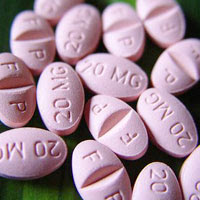
The long and short of it is that Celexa (an antidepressant) is now a part of my nightly pill regimen that also includes a blood thinner and blood pressure medicine. The last two are supposed to prolong and safeguard my life, and the first is supposed to help make me care about it again.
He's a good doctor, and I'm fortunate to be his patient.
It's been a couple of weeks, and I'm thinking a little more clearly, but not always. The crazy pills take 21 days or so to reach full impact, so we'll see where I am on clarity in a week or so. Somewhere, deep inside me, there's a will to live. A lust for happiness, in whatever form that might take. That part of me isn't dead, but it's on life support.
I have diversions enough that keep me from wallowing in the psychic void where pain lives. Work keeps me busy, although I find it increasingly irrelevant except as a way to generate honest cash. I care about doing a good job, but that's more a manifestation of neurotic perfectionism than anything else. Managing my health takes more time that it ever has, but I've never had surgery or a blood clot before. It takes time and slows me down, but I don't want to die or live with complications of a mismanaged surgical recovery. I see and talk to friends and family who are always there if I need them, but they generally give me the space I asked for while I try to rebuild my life.
And that is where I hit the wall: rebuilding. How do I do it? Where do I begin? What do I want it to look like? Are my best days behind me? What happens now?
I'll be 46 on Friday, but I am as unsure of myself as I was when I was a teenager starting college. Less sure of myself, to be honest. Back then, I was too naive to understand that I didn't know everything. I didn't have the weight of life and experience tugging me down. I can't think clearly about anything that isn't immediate these days.
 I have maintained enough sanity, however, to realize that I was on the edge of an abyss, staring down into its eternal darkness. If I teetered and fell, I might or might not be able to claw my way out. Through my clouded perceptions, I could see that fact clearly. It's happened before, and even the prospect of it happening again scared me to my bones.
It scared me so bad that I called my doctor to talk about “mental health issues”. I told him about the abyss and my fear of falling. To my surprise, he listened and believed me. I spoke honestly and even cried a little. And he listened.
The long and short of it is that Celexa (an antidepressant) is now a part of my nightly pill regimen that also includes a blood thinner and blood pressure medicine. The last two are supposed to prolong and safeguard my life, and the first is supposed to help make me care about it again.
He's a good doctor, and I'm fortunate to be his patient.
It's been a couple of weeks, and I'm thinking a little more clearly, but not always. The crazy pills take 21 days or so to reach full impact, so we'll see where I am on clarity in a week or so. Somewhere, deep inside me, there's a will to live. A lust for happiness, in whatever form that might take. That part of me isn't dead, but it's on life support.
15 April 2011
Tea Times
My hip surgery went remarkably well: a textbook case, I was reassured. My biggest problem post-surgery was nausea from the anesthesia (a common reaction, they said). So once I was able to hold food on my stomach the next morning, they released me with the best of prognoses. I went home and began my period of exile and recovery.
I learned to walk with crutches and how to use the motorized shopping cart at the grocery. I took pain pills and stared numbly at the tv. I worked on projects in the two-hour windows between when the meds began to wear off and the next dose hit.
Days dissolved into nights and then reconstituted into days again. I was bored silly and craved a change of pace. I should have been content with bored and recovering normally, I learned soon enough.
Four days in, my foot and leg began to swell inexplicably, and when they grew large enough for fear to override my instinct to ignore such inconveniences, I went to the emergency room (although not before calling a 24-hour nurse and almost daring her to tell me it was nothing). Three vials of blood and a sonogram later, the ER doctor came in with a terse diagnosis that belied the gravitas of his words: “You have a blood clot.” That was it. No explanation of how it might have formed or how serious it was.
I began to get a sense of the urgency those five short words implied when he immediately asked me if I had a family doctor I could see within 24 hours and was visibly relieved when I told him I did. “Good. We’ll get you fixed up tonight, but go see your doctor tomorrow.”
The nurse gave me a shot of blood thinner in the stomach (“it absorbs faster that way, honey”) and some pills (blood thinners, also), then sent me on my way. But not before I signed papers that conditioned my release on my promise to see my regular practitioner within 24 hours. Since it was 3:30 a.m., I hoped that it would be significantly less than that.
At the doctor’s office the next day, I was met by a large man who was not my doctor but who whisked me off to an exam room, nonetheless. Thus began my education about blood clots (aka "deep vein thrombosis" or "DVP").
 It turns out that the clinic where my GP practices has an entire department devoted to patients taking blood thinners, which I quickly learned was the treatment of choice for clots. The large man was a Coagulation Management Certified Nurse, and he would be my guide through the next six months of treatment. He would teach me the ins and outs and dos and don’ts of survival.
He taught me how to give myself a shot in the stomach (the fatty tissue) so that I could do so myself every twelve hours for the next 7-14 days. He told me to take the pill that I will be taking for 6 months at the same time every night. That he would tweak my dosage until it was right. It needs to make my blood thin enough that new clots don’t form, but not so thin that I hemorrhage.
Then we got to dietary issues that affect how the anticoagulant warfarin (aka coumadin) behaves. Green vegetables contain vitamin K, which mutes the effect of the medication, so in order to calibrate a good dosage, I have to eat the same amount of them consistently. I can have all I want as long as I have the same amount every day. The more green I eat, the more warfarin I have to take.
Herb teas are out—there exist scant clinical tests exploring interactions with the many herbs that are increasingly accepted as having medicinal properties. Green tea is out, likewise, but for different reasons: it delivers a massive dose of vitamin K in a fairly concentrated form. Cranberries* are out for a reason that lost me, other than they can inhibit the warfarin's effectiveness. I just know “no cranberries.” And, last but very certainly not least, extremely limited alcohol.
The others will be easy enough, but for a confirmed beer-hound like me, the last one gave me pause. Both my doctor and the Coag Nurse reinforced it to me, though: alcohol interferes with the liver’s processing of the warfarin and causes a buildup of the thinner in the blood, leading to blood so thin that lethal hemorrhages can occur. To that end, they put me on a strict ration of one beer a day.
That one hurt. I can live without cranberries, but I like my beers. I like them a lot. I miss it, even. I miss it like I would an old friend that I talked to regularly and honestly. However, if I ask myself “is this worth dieing for?” every time I get the urge to crack one open, the answer is pretty obvious: of course it’s not worth dieing for. Not right now, at least. I’m not ready.
I make light of this to a degree, but I understand the seriousness of blood clots. They can kill or cripple with the same capriciousness that they form. All that can be done is to make conditions as unfavorable for that to happen as possible. Thin the blood to prevent secondary clots and hope the original one stays in place as it dissolves away over time. It’s the standard, well-accepted course of treatment.
But it’s imprecise, part science and part art, as my coag nurse told me in our first meeting. After several visits, he and my doctor are still tweaking my medication dosage. And there are no guarantees: I could do everything I’m supposed to and still end up dead or severly disabled.
Although I know that the contemporary treatment is grounded in medical science, it feels a bit medieval, somehow akin to leeches and blood letting. I think over and over again that there must be some other more advanced treatment that simply gets rid of the clot instead plying it with potions. What’s next, I wonder sometimes: burying chicken bones and dancing naked under a full moon?
I know that’s not a fair or intelligent assessment, and one that I don’t really believe. It’s just the fear talking. It lives right beneath the glib face I put on every morning and take off when I’m home again, ready to boil to the surface like a blister at any time. The awareness of what could easily happen and the impotence to prevent it leaves me in a no man’s land between knowledge and fear.
 Given that I can no longer feed my inner beer hound, I’ve taken comfort in tea. Since herbal and green teas are out, I’ve rediscovered the joy of old-fashioned iced tea. The kind my grandmother always had on hand to wash down the cake she always mysteriously produced, no matter what time or when I dropped by. The tea that she made extra strong and then poured hot over ice and added enough water to finish the dilution.
We drank tea, ate cake and talked under the giant trees that shaded her front yard. When I was in college and feeling stressed or anxious, her house was just a short drive from campus. A short distance, but one far enough to transport me from a hectic urban, academic world to the relative calm and serenity of an old farm house in the country surrounded by pastures and fields.
My tension and worries began to evaporate the second I turned off the highway down her long driveway. By the time I made it to the bottom of the hill, I could breathe. Crossing the creek and climbing the hill in front of me took on a symbolic meaning. When I pulled in next to Grandpa’s truck, I sometimes sat there a few minutes, absorbing the peace. Then she’d appear from nowhere, and I knew I’d be okay.
Granny was a strong, practical woman whose eyes twinkled behind her weathered face with its rosy cheeks. She always looked taller than she actually was. She seemed afraid of nothing and knew what was important and what wasn’t. She made me feel like I could be in charge of my life as I grew into a man.
So for now, I’ll do what I’m supposed to: take my pills, watch what I eat, refrain from strenuous physical activity and ration my beer. I’ll be alert for complications like internal bleeding and call 911 if symptoms (chest pains, dizziness or shortness of breath) warrant. All the while, I know it’s a gamble, and no matter how much the odds are stacked in my favor, I’m not much of a gambling man.
All I can do is take charge and try to make peace with the unknowns. And drink tea. Not that over-priced noxious stuff that comes in a bottle and barely resembles tea. Real, fresh-brewed homemade tea. I make it like Granny: strong, to be diluted. (She was right: it’s better that way.) And I even made a banana bread (the closest I’ll ever get to a cake). It doesn’t bring me peace, per se, but it reminds me of peace. I find a small modicum of comfort in that.
It’s what I have. Here’s to you, old girl. Bottoms up.
----------------------------------------
*For conflicting opinions about cranberries and warfarin, see this article from the Lance Armstrong Foundation's LiveStrong.org site and this one from the Cranberry Institute.
I learned to walk with crutches and how to use the motorized shopping cart at the grocery. I took pain pills and stared numbly at the tv. I worked on projects in the two-hour windows between when the meds began to wear off and the next dose hit.
Days dissolved into nights and then reconstituted into days again. I was bored silly and craved a change of pace. I should have been content with bored and recovering normally, I learned soon enough.
Four days in, my foot and leg began to swell inexplicably, and when they grew large enough for fear to override my instinct to ignore such inconveniences, I went to the emergency room (although not before calling a 24-hour nurse and almost daring her to tell me it was nothing). Three vials of blood and a sonogram later, the ER doctor came in with a terse diagnosis that belied the gravitas of his words: “You have a blood clot.” That was it. No explanation of how it might have formed or how serious it was.
I began to get a sense of the urgency those five short words implied when he immediately asked me if I had a family doctor I could see within 24 hours and was visibly relieved when I told him I did. “Good. We’ll get you fixed up tonight, but go see your doctor tomorrow.”
The nurse gave me a shot of blood thinner in the stomach (“it absorbs faster that way, honey”) and some pills (blood thinners, also), then sent me on my way. But not before I signed papers that conditioned my release on my promise to see my regular practitioner within 24 hours. Since it was 3:30 a.m., I hoped that it would be significantly less than that.
At the doctor’s office the next day, I was met by a large man who was not my doctor but who whisked me off to an exam room, nonetheless. Thus began my education about blood clots (aka "deep vein thrombosis" or "DVP").
 It turns out that the clinic where my GP practices has an entire department devoted to patients taking blood thinners, which I quickly learned was the treatment of choice for clots. The large man was a Coagulation Management Certified Nurse, and he would be my guide through the next six months of treatment. He would teach me the ins and outs and dos and don’ts of survival.
He taught me how to give myself a shot in the stomach (the fatty tissue) so that I could do so myself every twelve hours for the next 7-14 days. He told me to take the pill that I will be taking for 6 months at the same time every night. That he would tweak my dosage until it was right. It needs to make my blood thin enough that new clots don’t form, but not so thin that I hemorrhage.
Then we got to dietary issues that affect how the anticoagulant warfarin (aka coumadin) behaves. Green vegetables contain vitamin K, which mutes the effect of the medication, so in order to calibrate a good dosage, I have to eat the same amount of them consistently. I can have all I want as long as I have the same amount every day. The more green I eat, the more warfarin I have to take.
Herb teas are out—there exist scant clinical tests exploring interactions with the many herbs that are increasingly accepted as having medicinal properties. Green tea is out, likewise, but for different reasons: it delivers a massive dose of vitamin K in a fairly concentrated form. Cranberries* are out for a reason that lost me, other than they can inhibit the warfarin's effectiveness. I just know “no cranberries.” And, last but very certainly not least, extremely limited alcohol.
The others will be easy enough, but for a confirmed beer-hound like me, the last one gave me pause. Both my doctor and the Coag Nurse reinforced it to me, though: alcohol interferes with the liver’s processing of the warfarin and causes a buildup of the thinner in the blood, leading to blood so thin that lethal hemorrhages can occur. To that end, they put me on a strict ration of one beer a day.
That one hurt. I can live without cranberries, but I like my beers. I like them a lot. I miss it, even. I miss it like I would an old friend that I talked to regularly and honestly. However, if I ask myself “is this worth dieing for?” every time I get the urge to crack one open, the answer is pretty obvious: of course it’s not worth dieing for. Not right now, at least. I’m not ready.
I make light of this to a degree, but I understand the seriousness of blood clots. They can kill or cripple with the same capriciousness that they form. All that can be done is to make conditions as unfavorable for that to happen as possible. Thin the blood to prevent secondary clots and hope the original one stays in place as it dissolves away over time. It’s the standard, well-accepted course of treatment.
But it’s imprecise, part science and part art, as my coag nurse told me in our first meeting. After several visits, he and my doctor are still tweaking my medication dosage. And there are no guarantees: I could do everything I’m supposed to and still end up dead or severly disabled.
Although I know that the contemporary treatment is grounded in medical science, it feels a bit medieval, somehow akin to leeches and blood letting. I think over and over again that there must be some other more advanced treatment that simply gets rid of the clot instead plying it with potions. What’s next, I wonder sometimes: burying chicken bones and dancing naked under a full moon?
I know that’s not a fair or intelligent assessment, and one that I don’t really believe. It’s just the fear talking. It lives right beneath the glib face I put on every morning and take off when I’m home again, ready to boil to the surface like a blister at any time. The awareness of what could easily happen and the impotence to prevent it leaves me in a no man’s land between knowledge and fear.
 Given that I can no longer feed my inner beer hound, I’ve taken comfort in tea. Since herbal and green teas are out, I’ve rediscovered the joy of old-fashioned iced tea. The kind my grandmother always had on hand to wash down the cake she always mysteriously produced, no matter what time or when I dropped by. The tea that she made extra strong and then poured hot over ice and added enough water to finish the dilution.
We drank tea, ate cake and talked under the giant trees that shaded her front yard. When I was in college and feeling stressed or anxious, her house was just a short drive from campus. A short distance, but one far enough to transport me from a hectic urban, academic world to the relative calm and serenity of an old farm house in the country surrounded by pastures and fields.
My tension and worries began to evaporate the second I turned off the highway down her long driveway. By the time I made it to the bottom of the hill, I could breathe. Crossing the creek and climbing the hill in front of me took on a symbolic meaning. When I pulled in next to Grandpa’s truck, I sometimes sat there a few minutes, absorbing the peace. Then she’d appear from nowhere, and I knew I’d be okay.
Granny was a strong, practical woman whose eyes twinkled behind her weathered face with its rosy cheeks. She always looked taller than she actually was. She seemed afraid of nothing and knew what was important and what wasn’t. She made me feel like I could be in charge of my life as I grew into a man.
So for now, I’ll do what I’m supposed to: take my pills, watch what I eat, refrain from strenuous physical activity and ration my beer. I’ll be alert for complications like internal bleeding and call 911 if symptoms (chest pains, dizziness or shortness of breath) warrant. All the while, I know it’s a gamble, and no matter how much the odds are stacked in my favor, I’m not much of a gambling man.
All I can do is take charge and try to make peace with the unknowns. And drink tea. Not that over-priced noxious stuff that comes in a bottle and barely resembles tea. Real, fresh-brewed homemade tea. I make it like Granny: strong, to be diluted. (She was right: it’s better that way.) And I even made a banana bread (the closest I’ll ever get to a cake). It doesn’t bring me peace, per se, but it reminds me of peace. I find a small modicum of comfort in that.
It’s what I have. Here’s to you, old girl. Bottoms up.
----------------------------------------
*For conflicting opinions about cranberries and warfarin, see this article from the Lance Armstrong Foundation's LiveStrong.org site and this one from the Cranberry Institute.
Subscribe to:
Posts (Atom)